


ASH 80 Hybrid
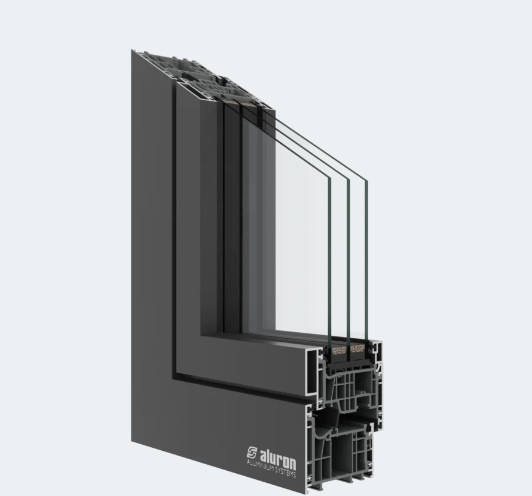
ASH 80 Hybrid: Where Performance Meets Intelligent Design
In today’s architecture and fenestration landscape, client expectations extend well beyond aesthetics. Performance, efficiency, comfort, and build quality are now prerequisites, not luxuries. The ASH 80 Hybrid system delivers on all fronts by innovatively combining two proven materials — aluminium for external strength and aesthetics with PVC (plastic) for thermal performance and internal efficiency — creating a hybrid that truly redefines what modern windows can achieve.
What Makes it “Hybrid”?
Instead of the traditional approach where a window frame is either all‑aluminium or all‑PVC, the ASH 80 Hybrid system uses external aluminium profiles bonded to an internal plastic (PVC) core. This gives you the sleek look and structural rigidity of aluminium on the exterior, while the PVC core dramatically improves insulation where it matters most — inside the wall plane. Thanks to an advanced bonding process, the two materials act as a single integrated structure.
Thermal Performance: A Passive‑Level Solution
One of the system’s standout performance metrics is its thermal insulation capability. The ASH 80 Hybrid can achieve a whole‑window U‑value as low as 0.73 W/m²·K, putting it in the realm of passive building performance — a benchmark prized in high‑efficiency design. In practical terms, a lower U‑value means less heat escapes in winter and less unwanted heat enters in summer, directly translating into energy savings and a more comfortable indoor environment.
For context, modern triple‑pane windows — which use three layers of glass and inert gas fills to improve insulation — can deliver U‑values as low as 0.15–0.20 W/m²·K, significantly better than typical double‑pane units (≈ 0.25–0.35 W/m²·K). This illustrates just how much impact additional insulation layers (and smart frame design) can have on overall performance.
Why Hybrid Matters — Beyond Just Numbers
Energy Efficiency & Comfort
By combining materials intelligently, ASH 80 Hybrid enhances thermal insulation without the weight or cost penalties that sometimes come with high‑performance aluminium products alone. This results in reduced heating and cooling loads, lower energy bills, and improved year‑round comfort.
Acoustic Performance
A well‑insulated window also helps with noise reduction, making indoor spaces quieter — a real benefit in urban or high‑traffic environments. While glazing type and gas fills play a large role in noise control, a well‑engineered frame system complements that performance.
Design and Durability
External aluminium gives architects the clean lines and durability they expect, while internal PVC contributes to thermal performance and reduces the reliance on heavy internal steel reinforcements. This hybrid solution can support large sashes and doors — a design plus for modern, expansive glazing projects.
Build Efficiency and Flexibility
Because the system integrates aluminium and PVC elements compatible with common fittings and manufacturing processes, it can cut production complexity and time relative to traditional all‑aluminium products.
The Bottom Line
In a market where performance demands continue to rise — driven by energy codes, sustainability goals, and owner expectations — hybrid systems like ASH 80 Hybrid present a compelling middle ground. You get the strength and style of aluminium, combined with the insulation advantages of PVC‑based construction, all in a single integrated solution.
For architects, builders, and developers focused on comfort, efficiency, durability, and design, hybrid window systems are becoming far more than a trend — they’re fast becoming a new performance standard worth considering on every high‑efficiency project.
Check out the ASH80 video:
